04 Oct 2026
Wooden Frame Mirror 80 x 160cm: measuring up the smaller size
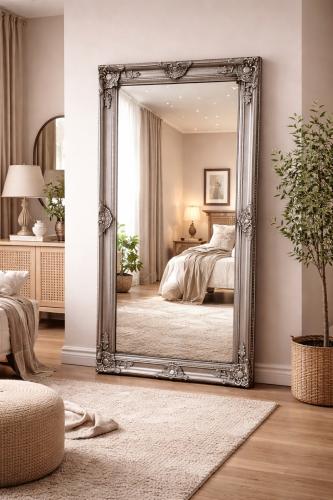
This guide is about
Wooden Frame Mirror (80 x 160cm)
The Wooden Frame Mirror (80 x 160cm) is the smaller of the two sizes this framed design is offered in. It is the one that fits most walls without a conversation about ceiling height, which is the practical argument for it over the taller size.
What the listing gives you
The frame is described as wooden with intricate detailing, and three finishes are offered: Champagne, Dark Silver and Gold, chosen on the product page. Beyond that the listing is decorative rather than technical. It does not state the frame depth, the thickness of the mirror, the weight, whether fixings are included, or whether the mirror is meant to hang or to lean.
| Detail | As listed |
|---|---|
| Size | 80 x 160cm |
| Larger size offered | 100 x 200cm, as a separate listing |
| Finishes | Champagne, Dark Silver, Gold |
| Frame | Wooden, with decorative detailing |
| Depth, weight, fixings | Not stated in the listing |
One thing to raise with the shop: the supplier's own product code for this mirror reads 80x170cm, while the listing title and the size list both say 80 x 160cm. The difference is only 10cm, but if the mirror is going into an alcove, between a dado and a cornice, or above a radiator with a tight gap, get the exact height confirmed before you order. The same applies to which figure is which: the listing does not label which number is the width and which is the height, so get that confirmed as well.
What 160cm does in a room
Hung with 160cm as the height, it gives most adults a near full-length reflection without needing the floor-to-ceiling scale of the larger size, and it leaves enough wall above and below that it does not have to be positioned to the millimetre. In a narrow hallway, taking 80cm as the width, a face that narrow on the long wall widens the space visually while keeping the walkway clear, because a wall-hung mirror takes no floor at all.
Two placements earn their keep. Facing a window, it returns daylight into the room rather than reflecting a blank wall. Behind or above a chest of drawers or a console, it fills the wall that furniture leaves empty and brings the frame detail down to where you can actually see it.
Before you drill
- Mark out 80 x 160cm on the wall in masking tape and live with it for a bit. It is the cheapest way to find out that a mirror is too high or too close to a light switch.
- Set the centre of the mirror at the eye level of whoever uses it, not at the midpoint of the wall.
- Ask the shop for the weight and for what fixings are supplied, then match them to what is behind the plaster. Plasterboard with nothing solid behind it needs fixings chosen for the load.
- Check the route in. A rigid 160cm panel has to turn your stair or hall corner before it gets to the wall.
- On delivery, check the mirror edges and the frame detail, and keep the packaging until you have looked over both.
Which finish, and which size
The listing says the finish enhances the ornamental craftsmanship but does not describe the three tones, what each finish is made of, or how it is applied. Screens render finishes like these unreliably, so ask the shop what Champagne, Dark Silver and Gold look like in person if you are matching them to existing lighting, handles or a bed frame.
On size, the taller Wooden Frame Mirror (100 x 200cm) is the same design at full height and is the stronger choice on a tall, otherwise empty wall. For something smaller again, the G-SY628 Tabletop Mirror sits on a surface, and the G-M011 Free-Standing Mirror stands on the floor if you would rather not fix anything to the wall. The rest of the wall mirrors range covers the other shapes and sizes. Delivery is free within 50 miles of our Glasgow store and £50 beyond, and when the measurements are settled the Wooden Frame Mirror (80 x 160cm) is the page to order from.