04 Oct 2026
Fencing 94A Oak: one pack to a bay, and why that matters
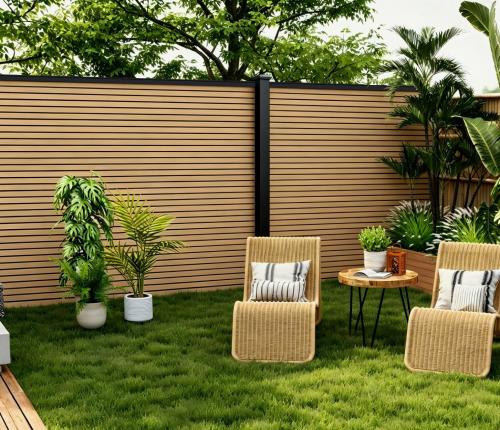
This guide is about
Fencing 94A - Oak - Outdoor - 180cm (1 Pack / 6pcs)
The Fencing 94A board pack in oak is the oak shade of the 94 profile, which at 30cm is the widest board width in this range, and that width changes the arithmetic rather than just the look. Where the narrower profiles take two packs to make up a fence panel, the listing puts this one at a single pack per panel.
One pack, one bay
The listing gives the board at 30 x 180 x 1.8cm when fitted and interlocked, six boards to a pack, and 3.24m² covered. Those numbers land exactly: six boards 30cm deep stack to 1.80m, the boards are 1.80m long, and 1.8 by 1.8 is 3.24m². A standard 1.8m by 1.8m bay is one pack with nothing cut and nothing over.
| Board size, fitted | 30 x 180 x 1.8cm |
|---|---|
| Boards per pack | 6 |
| Coverage per pack | 3.24m² |
| Packs per fence panel | 1, per the listing |
| Lines across a full bay | 5 joints, 6 boards |
That makes ordering about as simple as fencing gets: count the bays, order that many packs, add the shop's advised allowance. A 12m boundary at full height is seven bays and seven packs. A 20m boundary is twelve bays and twelve packs. There is no running total of leftover boards to keep track of, which is the real advantage of a board that divides into the bay height.
One figure to query before you order
The listing is not quite consistent on thickness. Its opening paragraph describes boards 2cm thick, while the size line reads 30 x 180 x 1.8cm. The difference matters where the board has to slot into an existing trim or a concrete post channel, so ask the shop which figure is right before you order fittings against it. The 180cm is clearly the length and the 30cm clearly the face, but confirm the thickness rather than working to either number.
How the width reads on a boundary
Six boards across a bay gives five horizontal lines. The 16cm profile gives eleven and the 15cm profile gives eleven too, so the difference on a long run is obvious from the house: wide boards quieten a boundary and read closer to a panel, narrow boards read as cladding. Width also means fewer joints to get level, which tells on a run where the ground falls away.
If you want the same width in a different shade, Fencing 94B in grey oak and Fencing 94D in dark oak are listed at the same size and the same pack of six. If you would rather have the tighter line pattern, Fencing 88A in Oak 03 is the 16cm board, and that one is two packs to a bay.
Posts, trims and the questions left open
The listing names trims for fitting against existing concrete posts and posts for a new run. The trims are the Fencing 94 Trim in black, which is the one named for this profile, and the Fencing 86 Trim. The posts are the 6-inch black fence post, four to a pack, and an 8-inch version in a pack of two. Both posts are black, which against an oak shade is a contrast; look at them together before you order the run.
On the material, the listing says the composite is weather and UV resistant and protects against fading in direct sunlight, and that the boards interlock without visible gaps. It does not state what the composite is made of, classify it for fire, give a wind rating, or say whether fixings come with the posts and trims. Oak is a shade name, with nothing said about sheen or grain depth, so see a board in daylight.
The full range sits in fencing, within the wider garden and outdoor listings. Delivery is free within 50 miles of the Glasgow store and £50 beyond. Count the boards on arrival and lay one against your measurement before anything is cut. When the bays are counted, order the Fencing 94A oak pack one to the bay, plus the allowance the shop advises.