04 Oct 2026
Chelsea Console Table: 120cm fit, pedestal base and measuring up
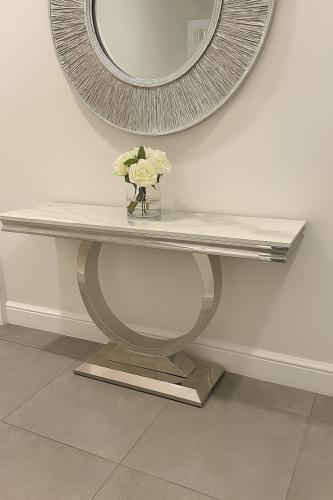
This guide is about
Chelsea Console Table
The Chelsea Console Table is a 120cm console standing on a single round pedestal, and that combination decides most of where it can go. This is a guide to measuring for it, to what the listing actually confirms, and to the details you should ask about before you order.
The figures, exactly as listed
| Detail | As the listing gives it |
|---|---|
| Size available | 120 x 40 x 75cm |
| Frame | Chrome |
| Base | Circular pedestal |
| Surfaces named | Marble or ceramic |
| Product code | AWS-LEWIS46 |
Those three figures read as width, then depth, then height, and the description's own shorthand of 1.2m x 0.4m supports that reading. Even so, if a tight alcove or a fixed run of wall depends on it, ask us to confirm which figure is which before you commit.
Measuring a hall or a wall for 120cm
Start with the walkway you will be left with rather than the wall itself. Measure across the narrowest point of the hallway, skirting included, and take 40cm off for the depth. What remains is the gap people will actually walk through, carrying shopping, with the front door swinging into it. Measure it as the space is really used, not as it looks when it is empty.
Then the length. 120cm is the table and nothing else, so look hard at both ends of the run: a radiator, a door architrave, a meter cupboard, a stair newel post. Mark 120cm on the floor with tape and leave it there while you use the space normally before you decide.
Height is listed at 75cm. Check that against the sockets and switches on that wall, and against the bottom edge of anything you intend to hang above the table. A mirror or a picture wants a clear gap above the surface so it does not read as stuck to it.
What a pedestal base changes
The listing says the pedestal design maximises legroom while keeping the piece visually light. In a narrow space that is the practical difference: a central pedestal leaves both ends of the underside clear, so a basket, a pair of boots or a small stool can tuck under either side without meeting a leg.
A four-legged console puts a leg at each corner instead, which looks steadier and divides the space beneath into a single bay. If you are weighing the two up, the Lewis Console Table and the SG-Lewis Console Table are four-leg consoles listed at the same 120 x 40 x 75cm, so you can compare the look without changing the footprint.
One thing to check with any pedestal: the floor under it. All the load sits on one small area, so a thick rug, a worn floorboard or a loose tile will show up as a wobble that a four-leg frame might have bridged.
What the listing does not say
- Which top you receive. Marble and ceramic are both named in the description, but the product page carries no option to choose between them, so confirm the surface with us when you order.
- Weight. No figure is given, and that matters if the table has to go up a stair with a turn in it.
- Assembly. Nothing states whether the top arrives fixed to the base or packed separately.
- Care. No cleaning instruction is listed, and stone and ceramic are not looked after the same way. Worth asking once you know which one you have.
These are gaps in the paperwork rather than hidden faults. Ask, get the answers, and you will know exactly what is arriving.
If 120cm is too much
A 120cm console is a lot of table for a narrow Victorian hall. The Torino Console Table is listed at 85 x 34 x 70cm, which is 35cm shorter and 6cm shallower, and in a tight corridor those 6cm are the ones you notice. You can see the rest of the shorter and taller options together in console tables.
Delivery is free within 50 miles of our Glasgow store and £50 beyond. When you have your measurements, the photographs on the Chelsea Console Table page show the pedestal and frame from several angles, and we will answer the top, weight and assembly questions by return before you order.